Aspen swim spa on a deck in a wooded backyard at dusk

Aspen Spas Dealer · Fort Smith, Arkansas

A Spa Is Good in January, Too

We sell and install Aspen spas, handcrafted in St. Louis by a family company that has been at it since 1991.

Why we sell Aspen

Aspen is family owned and has been building spas in St. Louis since 1991. Two brothers started it and still run it, out of a factory with its own showroom attached. St. Louis is about five hours up the road, which matters more than it sounds. When a part is needed, the people who built the thing are in the same time zone as the people who sold it to you.

The design idea they lead with is that one seat can't suit every body, so the seats inside a single spa sit at different heights with different jet patterns. That's why two models with the same footprint can feel completely different once you're in them, and it's why we'd rather you came and sat in a few than picked one off this page.

Three ways to build the same spa

Most models come three ways. The shell and the seats don't change. What changes is how hard it runs and what it comes with.

VS

Value Series

One pump and up to 32 jets, plus an LED light and an ozone water purifier. The one worth asking about, because it's convertible between 110 volt and 220 volt. On 110 it plugs into a regular outlet, which can save you an electrician visit.

GS

Great Series

Up to two pumps and up to 50 jets, with a digital control, a waterfall and color changing LED lighting. This is the one most people land on.

ES

Extreme Series

Up to four pumps and up to 70 jets, including two Volcano jets that move 70 gallons a minute. Adds a touchscreen, an app that runs the spa from your phone, and a lit waterfall.

We'll walk you through which one makes sense once we know how you'll use it and what's already run to that part of your yard.

What the seats actually mean

Every spa gets described in the same words and none of them mean much until you've sat in one. Here's the plain version, so the spec lists further down actually tell you something.

Captain's chair

A deep bucket seat built for one person, sitting upright. Jets hit your neck, back, hamstrings, calves and feet, and there are small ones in the armrests for your hands and wrists. It's the seat everybody fights over.

No-float lounger

A full recline with your feet up. Aspen shapes theirs so you don't float off it, which is the usual complaint about loungers. One person at a time, and it takes up a whole side of the spa.

Open love seat

A little more upright than a captain's chair, sized for two people sitting close. You can swivel side to side to move the jets across your back, shoulders and sides.

Bench seat

Sits you higher in the water, so it works as a step on the way in and as somewhere to cool off when you've had enough heat. Jets aim at your lower back. This is usually where the kids end up.

Foot well

The open space in the middle. A bigger foot well means more room for everybody's legs, and room to stand up and stretch. A spa without a lounger has a noticeably bigger one.

One more thing worth knowing. Jet count on its own doesn't tell you much, because a jet doesn't do anything without a pump behind it. A spa with 40 jets and two pumps can hit harder than one with 50 jets and a single pump, since the second pump means more of them run at full pressure at the same time. When you're comparing models, look at the pumps alongside the jets.

Nine spas

Sorted from the largest footprint down. Seat counts are the manufacturer's, and the only way to really know is to get in one.

Four swim spas

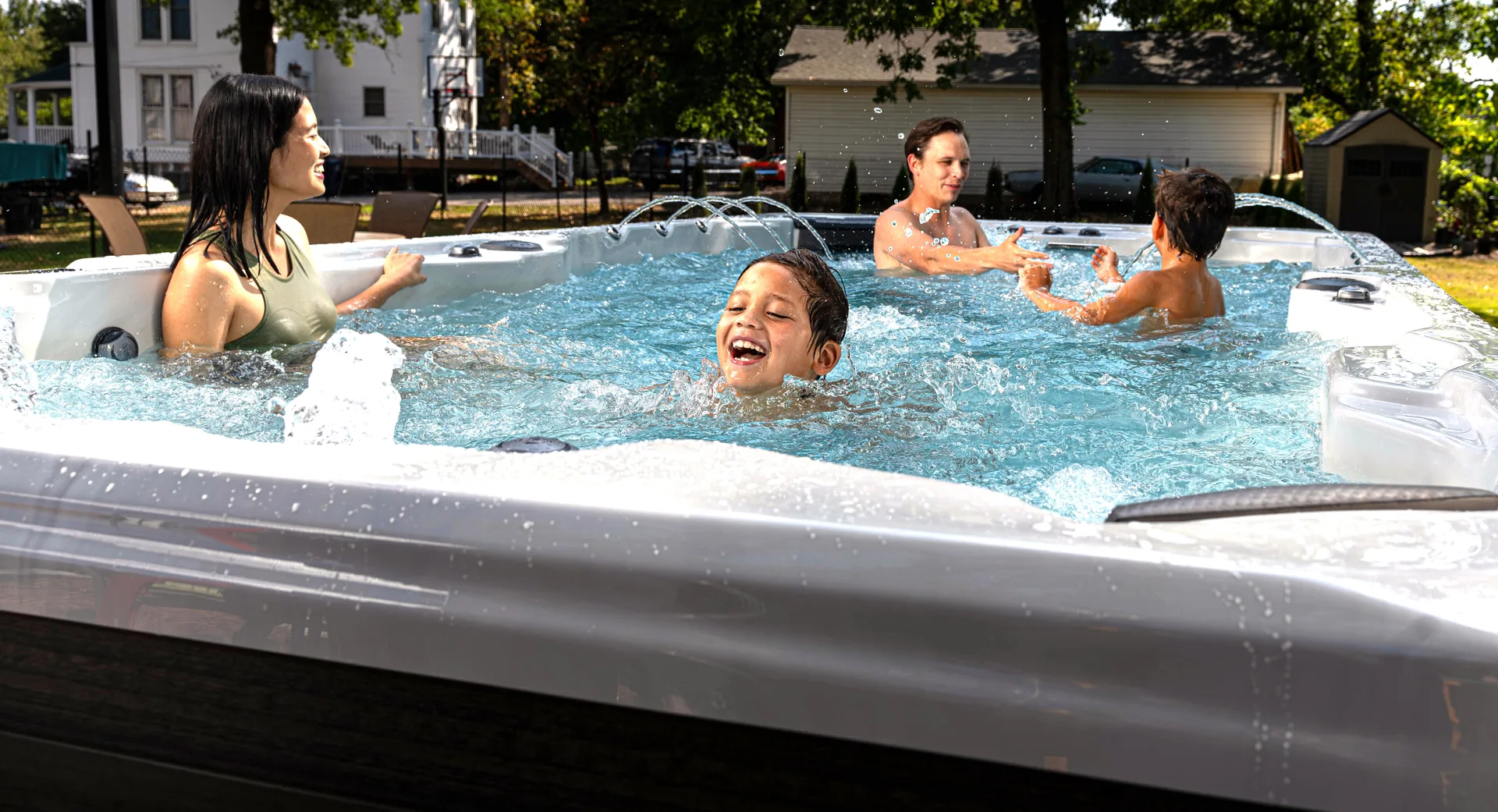
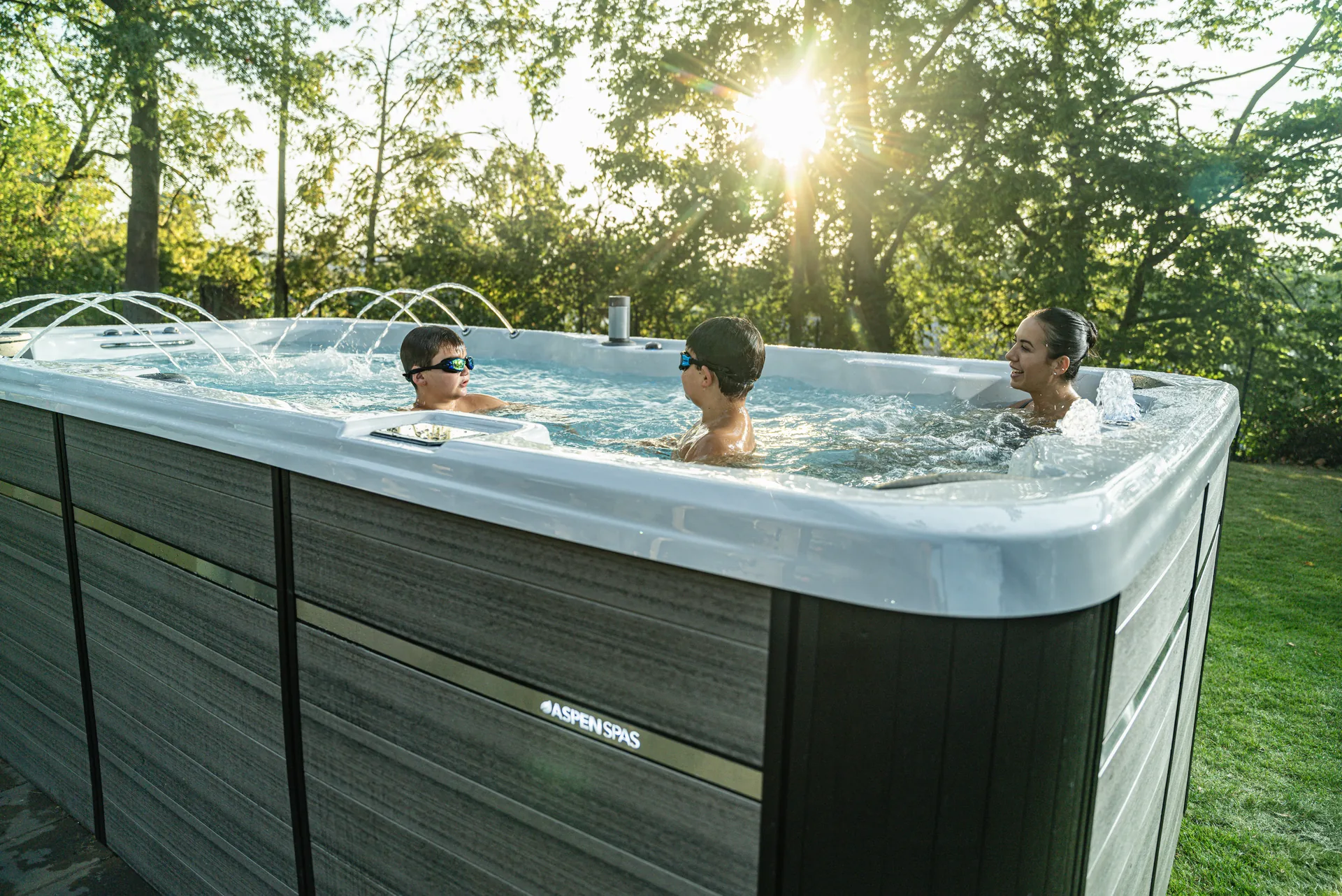
A swim spa is a different animal from a standard spa. You swim in place against a current, and it still runs hot, so it does two jobs at once. The S.W.I.M. models keep the lane clear. The Party models trade some of that lane for five more seats.

A family playing together in an Aspen swim spa in a backyard in daylight

How they're built

The shell

Seven layers, starting with the acrylic surface and running through fiberglass, a balsa core and a layer of eco spray foam. It's the part you never see and the part that decides how long the spa lasts.

The plumbing

Two inch schedule 40 pipe with ninety degree sweep elbows rather than tight corners. Water that doesn't have to fight its way around a bend arrives at the jet with more pressure behind it.

The insulation

Aspen insulates the shell, the cabinet, the base and the lip, not just the shell, and the cover is four inches thick. There's a heavier Xtreme Polar package on top of that if you want it.

The cabinet

Maintenance free, with the look of real wood. It sits on a base made from recycled plastic rather than a wooden frame that can rot.

What to sort out before it arrives

The pad

Filled, the small models come in around 3,200 pounds and the big swim spas pass 18,000. That needs a proper base, and it's a conversation to have before delivery day rather than on it.

The electrical

Electrical hookup isn't included. State law requires a licensed electrician, so someone qualified handles that piece separately.

Getting it in

We need a clear way to get it to the spot. We check gates, slopes, corners and anything overhead before setting a date.

Where it goes

Close enough to the house that you'll actually use it in February, far enough that it isn't the first thing you see out the kitchen window.

Better bought with the pool

We sell spas on their own and we always will. The version that works out best for people, though, is the one that goes in while the pool is being built, and it's worth knowing why before you decide to wait.

The pad gets poured with the deck

A spa needs a level base that can carry several thousand pounds. Put in with the pool, that pad is part of the concrete we're already pouring, so it sits flush with the deck instead of on a slab somebody added later.

The electrician is already here

Your pool equipment needs a licensed electrician on site either way. Running the spa circuit on the same trip is a great deal simpler than calling somebody back out to trench a second line across a finished yard.

Easy now, hard later

During the build the gates are open, the yard is already torn up and there's equipment on site. Moving a spa into a finished backyard with new concrete and fresh landscaping is a different job entirely.

You place it while the yard is still on paper

Decided early, the tub goes where you actually want it. Decided late, it goes wherever there happens to be room left over.

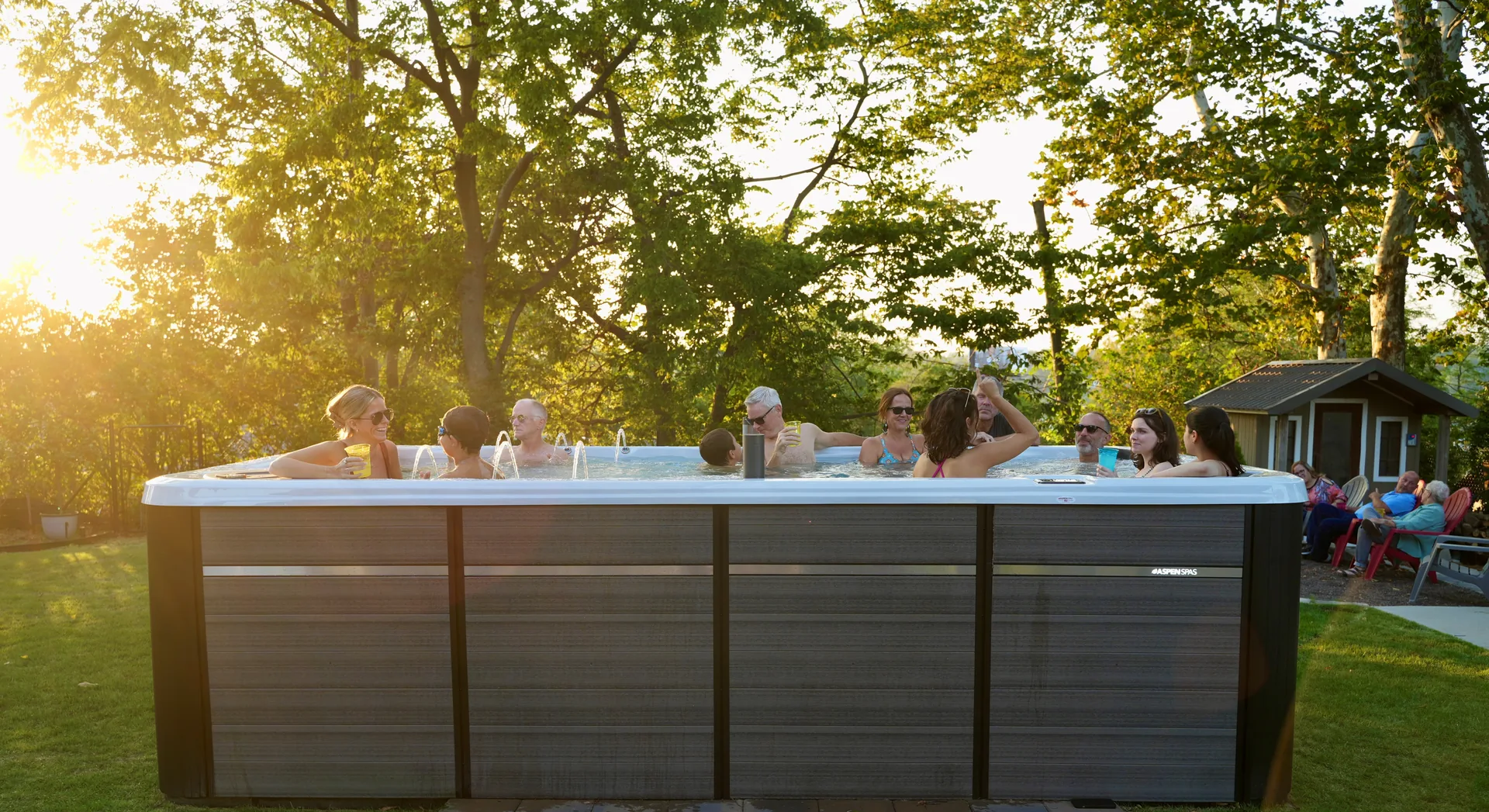
People in an Aspen swim spa with the sun coming through the trees behind it
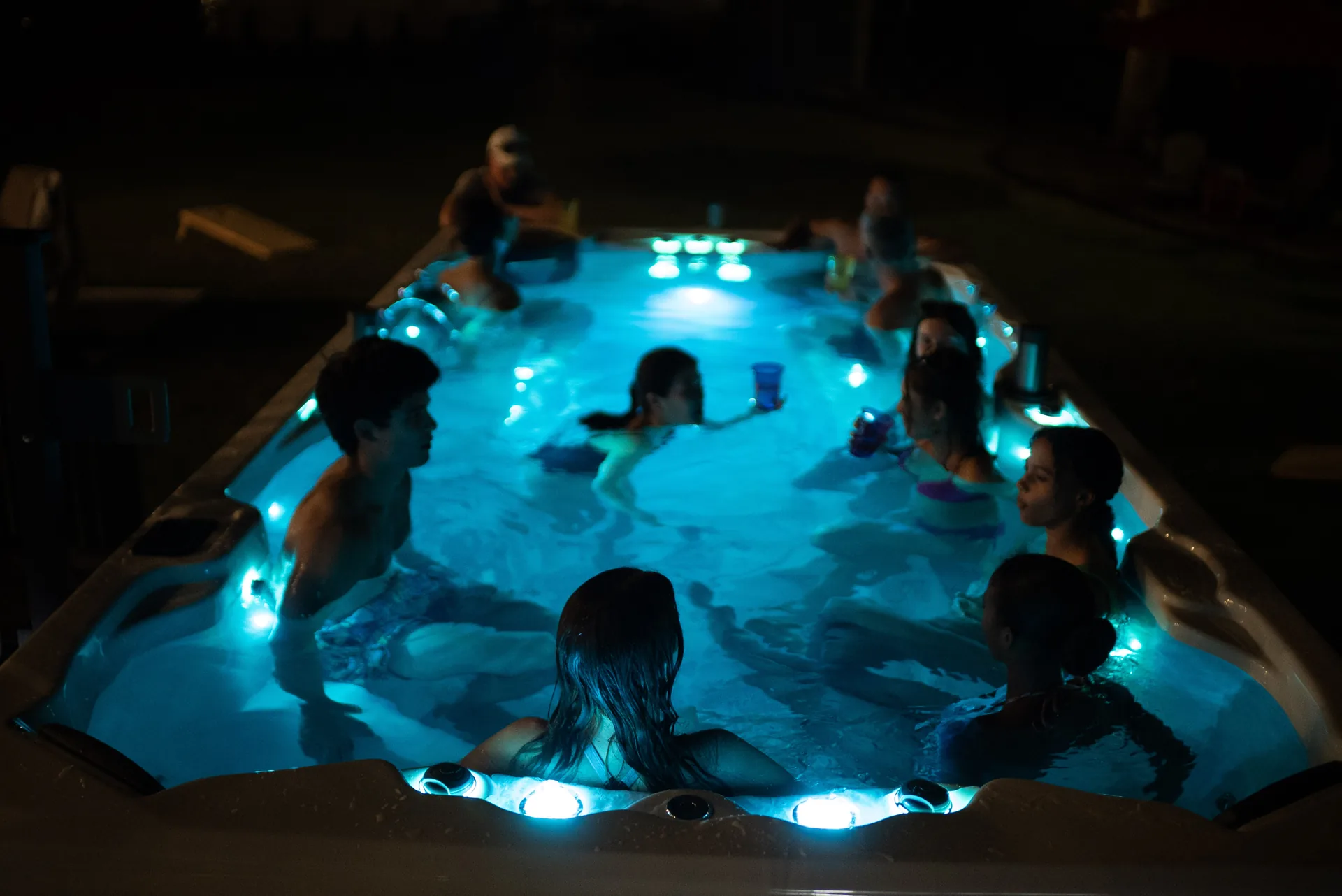
An Aspen swim spa lit up at night with a group of people in the water

Here's the part most people work out a year too late. An Arkansas pool is comfortable maybe five months of the year. A spa is good for twelve.

Questions people ask us about spas

The brands behind the build

We install what these three companies make. The links go straight to the manufacturers so you can do your own research before we ever sit down together.

Imagine Pools

Imagine Pools builds the fiberglass shells. We install them. Their range covers a lot of ground on shape, depth, tanning ledges and built in spa seats, so it's worth walking through before your consultation. Come in knowing which shapes you like and the conversation goes a lot faster.

S.R. Smith

S.R. Smith builds the slides, rails and ladders. We fit them. If a slide is anywhere in your thinking, say so early. The footing and the water line for a slide are much easier to set while the deck is still being formed than to add on later.

These links leave our site and open in a new tab.

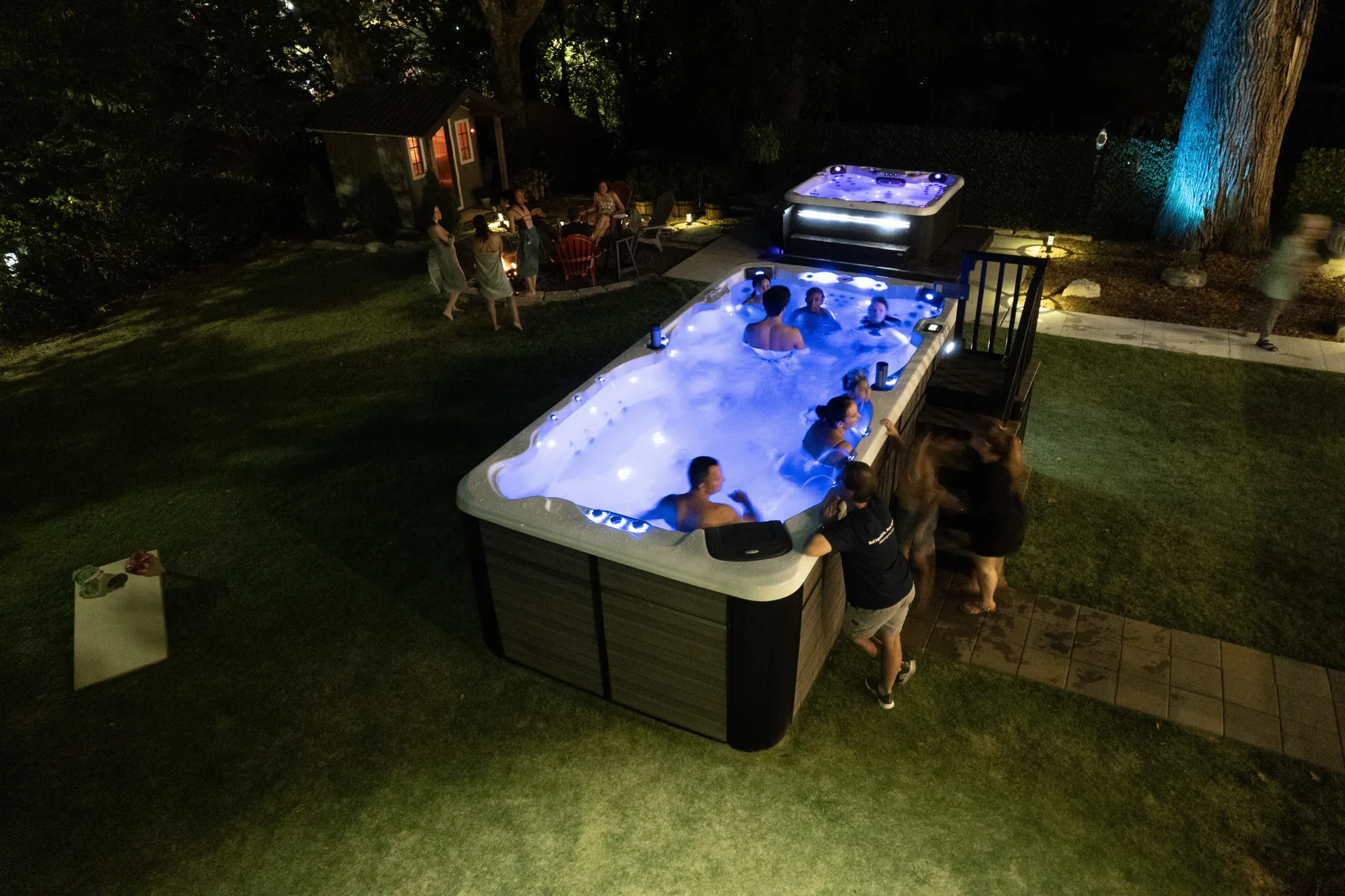
A lit Aspen swim spa in a backyard at night, seen from above

Come sit in one

Jet counts and seat counts only tell you so much. Tell us how you'd actually use it and we'll narrow it to two or three worth your time.